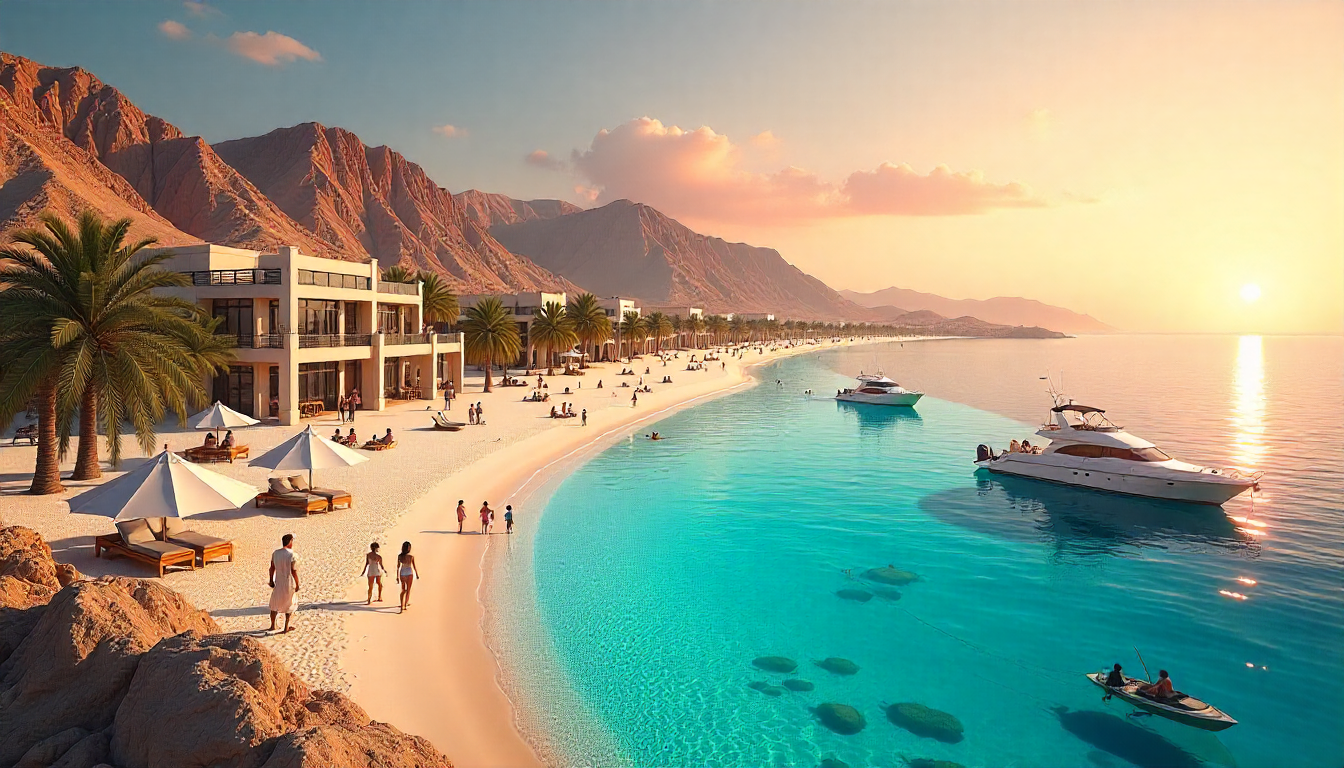
Saudi Arabia’s Red Sea coast is quickly emerging as one of the world’s most captivating new travel destinations. Stretching over 1,800 kilometers, this unspoiled coastline offers a stunning blend of turquoise waters, pristine beaches, vibrant coral reefs, and untouched islands—many of which remain largely undiscovered. As part of Saudi Arabia’s Vision 2030 plan, the Red Sea Project is set to redefine luxury ecotourism, blending sustainability with high-end experiences. From diving adventures in crystal-clear waters to exploring ancient trade routes and coastal heritage sites, the Red Sea coast offers an unparalleled mix of nature, culture, and modern hospitality. As infrastructure rapidly develops and global travelers seek out unique, less-traveled escapes, this region is poised to become a beacon of sustainable tourism and a jewel of the Middle East. Discover the hidden treasures of Saudi Arabia’s western shores.
1. A Vision Fueled by Ambition & Data
The Red Sea Project, launched in July 2017 as part of Saudi Vision 2030, covers 28,000 km² along 200 km of coastline between Umluj and Al‑Wajh, including more than 90 islands and Al Wajh lagoon, a sensitive ecological zone of 2,081 km².
Key economic targets:
- Visitor cap: 1 million per year to preserve ecosystem integrity.
- Expected to contribute SR85 billion (~US $22.6 billion) to GDP annually by 2030.
- Creation of 210,000 jobs and capturing 30 % of leisure tourism and 40 % of entertainment spending in the Kingdom by 2030.
By 2025, Saudi Arabia as a whole welcomed over 30 million international tourists, generating nearly SR168.5 billion (~US $44 billion) in 2024 with steady year‑on‑year growth.
2. Phases & Real-Life Milestones
Phase One (Completed 2023–2024)
- Six Senses Southern Dunes (Nov 2023) – first resort, desert wellness focus
- St. Regis Red Sea Resort (Jan 2024) – first island resort in Ummahat Islands
- Nujuma, a Ritz‑Carlton Reserve (May 2024) – ultra‑luxury flagship
- Shebara Resort (Nov 2024) on Sheybarah Island, featuring over‑water villas
- Desert Rock Resort (Dec 2024) inland canyon retreat
Red Sea International Airport began operations in September 2023 and by April 2024 offered international flights from Dubai, targeting 1 million passengers/year by 2030.
Ongoing & Future Plans
- By 2025: 24 resorts operational, plus wellness‑focused Amaala project with 29 hotels; total Red Sea resort network to reach 50 hotels, 8,000 rooms, across 22 islands + 6 inland sites.
- Shura Island (“Coral Bloom”)—hub of the project, designed by Foster + Partners with 11 luxury brands and Saudi’s first 18‑hole golf course opening in 2025.
- Sustainability: 75% of the area conserved, 30% net positive conservation benefit by 2040, 100% renewable energy, zero single‑use plastics, battery storage, all‑e‑vehicles, and hydrogen seaplanes.
3. Bringing It to Life: Lifestyle & Experiences
- Jeddah’s Waterfront: Roshn Waterfront is drawing 55 million visitors/year, complementing marine tourism along the coast. The Jeddah Yacht Club (101 berths) anchors super‑yacht tourism in the region.
- Careers & Skills: Over 1,000 Saudis trained in 2024 as dive instructors, marina staff, guides; includes rising participation by women in sailing and powerboat sports.
- Activities: snorkeling/diving among reefs, yacht cruises, fishing, sled dinners, hiking dunes, spa‑based wellness—plus events like Jeddah Season attracting 1.7 million visitors in 52 days in mid‑2025.
4. A Sample Itinerary
Day 1: Arrive at Red Sea International Airport → Settle into St. Regis Red Sea Resort → Sunset beach walk and coral snorkeling in Ummahat Islands.
Day 2: Day‑trip to Shura Island: tour the Coral Bloom hotels, visit the golf course, enjoy island dining and guided reef kayaking.
Day 3: Desert wellness retreat at Six Senses Southern Dunes → Spa therapy, dune hikes at sunrise, stargazing at one of the world’s largest Dark Sky reserves.
5. Challenges & Sustainable Promise
While touted as a luxury destination, ecological stewardship is front‑and‑center: more than three quarters of the area is kept aside for conservation, with protected coral reefs, mangroves, seagrass beds and endemic biodiversity.
Saudi authorities work under strict regulations—“More Than a Sea” campaign emphasizes sustainable marine tourism via licensed operations, marine waste control, investment safeguards, and territory protection covering 1,800 km of coastline, 1,000 islands, 130 natural+cultural sites.
6. Why This Matters
The Red Sea Coast is not merely about luxury resorts—but represents:
- A strategic economic diversification reducing oil dependency and boosting non‑oil GDP
- A new brand identity for Saudi Arabia, in global tourism circles, appealing to affluent and eco‑sensitive travelers
- A crossroads of culture, heritage, marine lifestyle, wellness, and environment
- A test case for regenerative tourism that balances development with conservation
Data at a glance
| Metric | Value / Status |
|---|---|
| Area | 28,000 km² |
| Islands included | ~90 (22 to be developed) |
| Hotels by 2030 | 50 (≈8,000 rooms) |
| Visitors allowed/year | 1 million (cap for preservation) |
| Economic contribution by 2030 | SR85B (~US $22.6B) |
| Jobs created by 2030 | ~210,000 |
| Conservation area | ~75% of site |
| Energy model | 100% renewable, zero waste |