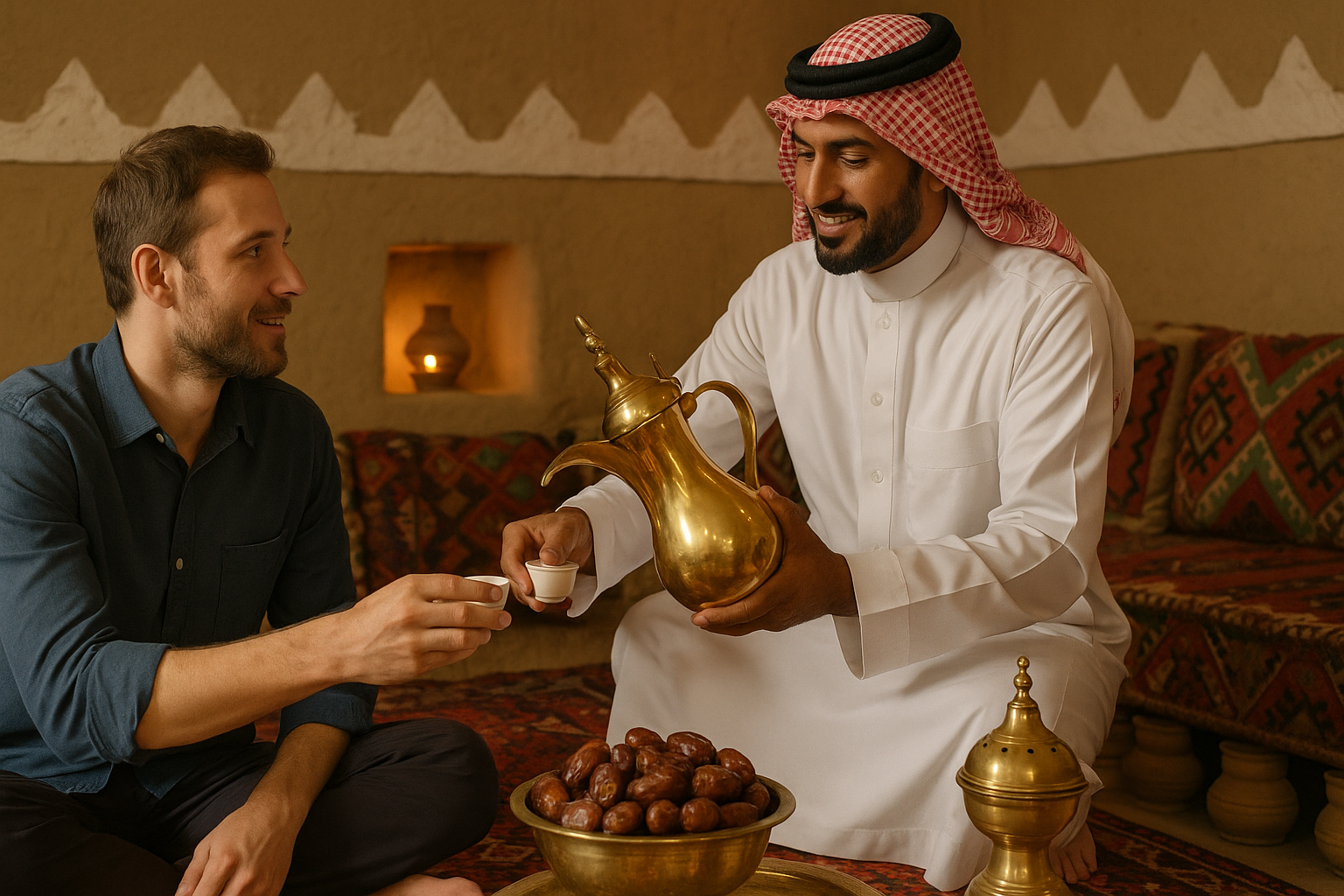
Visiting Saudi Arabia offers more than just sightseeing—it’s an invitation into a culture renowned for its warm and generous hospitality. Traditional Saudi hospitality is deeply rooted in Bedouin customs, emphasizing respect, generosity, and the art of making guests feel truly welcome. As a guest, you can expect a unique experience where every gesture, from the greeting to the serving of coffee and dates, carries cultural significance. Hosting is considered an honor, and Saudis often go to great lengths to ensure guests feel comfortable, valued, and respected. Whether you are invited to a family home or a formal gathering, the experience is marked by kindness, attention to detail, and shared meals that bring people together. Understanding these customs not only enriches your visit but also fosters meaningful connections with your hosts.
The Warm Welcome: Entering a Saudi Home
Upon arrival, guests are greeted with the traditional Arabic greeting, Salam Alaykum (“Peace be upon you”). In formal settings, this is often accompanied by a handshake, though in more conservative contexts, a nod or slight bow may be preferred.
The heart of Saudi hospitality begins with the offering of Arabic coffee (qahwa) and dates. This gesture is not merely symbolic but a genuine expression of respect and goodwill. It’s customary to accept the offering and take at least a small sip; declining may be perceived as impolite. Hosts will often refill your cup until you politely indicate you’ve had enough, typically by shaking the cup.
Dining Etiquette: Sharing a Meal
Meals in Saudi Arabia are communal affairs, emphasizing the values of sharing and community. It’s common to find dishes like lamb, chicken, and rice served in abundance. Guests are often offered the most prized portions, such as the sheep’s head, as a mark of honor.
When dining, it’s customary to eat with the right hand, as the left hand is considered unclean. Washing hands before and after meals is a standard practice, and many establishments provide washing areas for this purpose.
The Majlis: The Heart of Social Interaction
The majlis is a traditional gathering space in Saudi homes, often used to receive and entertain guests. Decorated with cushions and carpets, it serves as a place for conversation and bonding. In regions like Asir, the majlis is adorned with al-Qatt Al-Asiri, a distinctive style of geometric painting, adding a cultural touch to the setting.
Gift-Giving: A Sign of Respect
While not obligatory, presenting a small gift when visiting a Saudi home is a thoughtful gesture. It’s advisable to offer gifts with the right hand or both hands, as the left hand is considered impolite for such exchanges.
Cultural Sensitivities: What to Avoid
- Alcohol and Drugs: The consumption and possession of alcohol and drugs are strictly prohibited under Sharia law and can result in severe penalties.
- Public Behavior: Public displays of affection are frowned upon. Maintaining modesty in dress and behavior is essential.
- Photography: Always seek permission before taking photos of people, especially women, as this can be considered intrusive.
Modern Twists on Tradition
While traditional hospitality remains at the core, Saudi Arabia is embracing modernity. The tourism sector is expanding, with investments in luxury hotels and cultural experiences that blend the old with the new. For instance, the Dar Tantora hotel in AlUla offers guests an immersive experience in restored mud-brick houses, reflecting the region’s rich history.
Tips for Travelers
- Punctuality: Being on time is a sign of respect.
- Dress Modestly: Even in relaxed settings, modest attire is appreciated.
- Respect Traditions: Embrace local customs and show genuine interest in the culture.
Conclusion
Saudi Arabia’s hospitality is a testament to its rich cultural heritage and deep-rooted values. By understanding and respecting these traditions, visitors can experience the warmth and generosity that define Saudi hospitality.